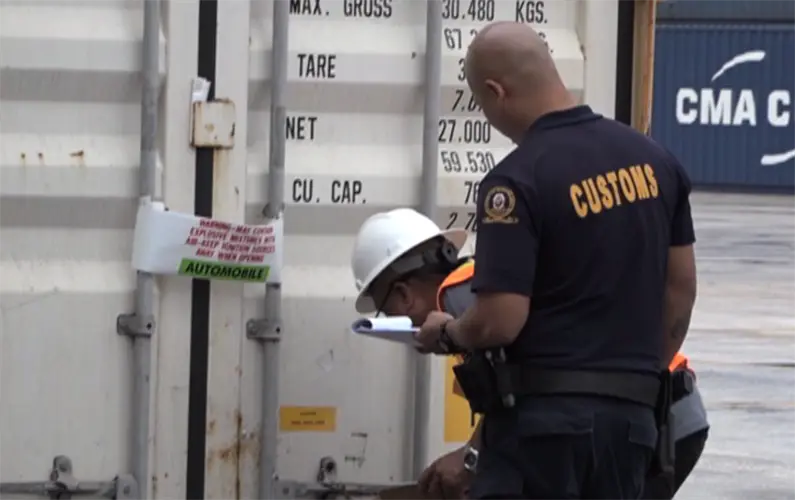
As drug-related arrests rise and community safety concerns grow, lawmakers are pressing for answers about how illegal drugs are entering Guam.  That scrutiny turned to the Guam Customs and Quarantine Agency during a legislative oversight hearing focused on border security and enforcement.

The island's drug problem is increasingly visible – in magistrate reports, court cases, and in the growing unease felt across neighborhoods. But for residents and policymakers alike, one question continues to surface: where are the drugs coming from? That question framed a wide-ranging oversight hearing for the Guam Customs and Quarantine Agency, the island’s first line of defense against illegal drugs and contraband – while also keeping lawful trade and travel moving.

Committee chairman Senator Jesse Lujan emphasized that border security must be treated as a concrete priority, not just a talking point. He said, “We cannot keep saying we want to stop the flow of illegal drugs and contraband while failing to put our money where our mouth is.”

Customs is responsible for every point of entry into Guam – from the airport and U.S. Postal Service to military installations, marinas, and the Port Authority of Guam – using specialized enforcement teams that include drug detector dogs, x-ray inspections, maritime interdiction, and intelligence units. 

During the hearing, Customs director Ike Peredo presented enforcement data showing that in 2025, the agency seized about 324 pounds of methamphetamine, with an estimated street value of $8.6 million. But the data also revealed a notable gap: none of those meth seizures were made at the Port Authority of Guam, even after a five-week special operation that inspected maritime vessels, vehicles, and shipping containers.

That raised pointed questions from Senator Therese Terlaje, who said, “The report that you made today regarding methamphetamines, you said there were 48 seizures. Is any of that from the port?” Peredo replied, “Not with meth.”

The senator continued, “Do you really just believe that there’s no methamphetamines coming through the port?”, to which Customs Colonel Franklin Gutierrez said, “I just believe that we haven’t found it yet. We’re still looking.”

The discussion unfolded as Attorney General Douglas Moylan continues to call for 100% inspections at the port, previously alleging that vehicles remained uninspected for days – creating opportunities for drugs movement. Peredo disputed that account, saying K-9 inspections were conducted the delay occurred because an importer failed to appear for clearance.

While Customs leadership acknowledged the port is vulnerable – as any border is – they told senators that intelligence-led inspections and safeguards are in place to prevent tampering and detect illicit drugs.

For lawmakers, the hearing underscored a persistent challenge: ensuring Guam’s borders are adequately staffed, funded, and monitored – while confronting a drug problem that continues to affect communities islandwide.