Two measures heard at the Guam Legislature this week addressed very different, but equally fundamental, questions: how we name ourselves as a people, and how we ensure fairness in government. Lawmakers heard testimony on standardizing the spelling of "CHamoru" in public records, and on tightening rules against nepotism in public employment.

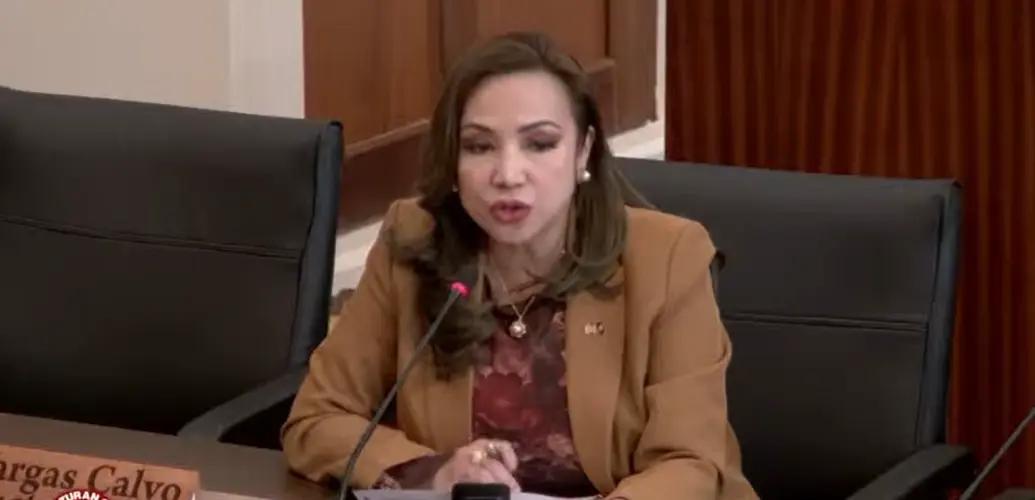
How Guam defines its identity – and how it governs itself – were both under the microscope during a public hearing this week. First up, Bill 218 by Senator Shelly Calvo, would require the official use of the spelling “CHamoru” in place of “Chamorro” across Guam law, government policy, and public education. Calvo stated that the use of two spellings creates confusion and weakens language preservation efforts.

Bill 218 also notes that “Chamorro” is a Spanish Colonial-era spelling that does not follow the official CHamoru orthography developed by the Kumisión I Fino’ CHamoru and adopted in 1983, while “CHamoru” more accurately reflects indigenous pronunciation and linguistic structure.

Calvo told lawmakers the bill is not introducing something new, but formally affirming what is already widely practiced. She also tied the issue to how guam presents itself beyond the island, saying, “We often speak about utilizing the uniqueness of Guam’s heritage, culture, and identity to propel our tourism efforts. Yet, we fail to focus on strengthening the very commodity many seek to prompt and sell on the global stage.”

Dr. Laura Souder, chairwoman of the Kumisión, testified that consistency in spelling is especially critical as more children learn CHamoru in classrooms rather than at home. She added that aligning spelling with pronunciation is an act of respect – and cultural sovereignty. 

“This effort to standardize government usage is but another step to complete the process, aligning our spelling and naming practices with the way words are pronounced in our spoken language is a sign of profound respect for the mother tongue that has been gifted to us by our indigenous ancestors," she said.

Bill 218 would also establish an inter-agency working group to guide implementation, allow limited exceptions for historical and legal accuracy, and require a progress report to lawmakers within one year.

Senators then turned to Bill 62 – the “No More Pari Pari Act of 2025” -- introduced by Senator William Parkinson, who offered, “It's core purpose is straightforward: to ensure that public employment decisions are based on merit, not family relationships, ultimately, to restore public confidence in the fairness and integrity of government hiring practices.”

However, the measure does not ban relatives from government employment outright.  Instead, it focuses on preventing hires within the same agency when a close relative serves as the appointing authority, and barring direct supervisory relationships between close relatives.

“Our island is small," Parkinson continued. "Our families are interconnected and relationships often overlap with professional life. That reality makes strong objective rules more necessary, not less.”

Together, the bills reflect ongoing efforts to define Guam’s identity while reinforcing fairness and accountability in government.