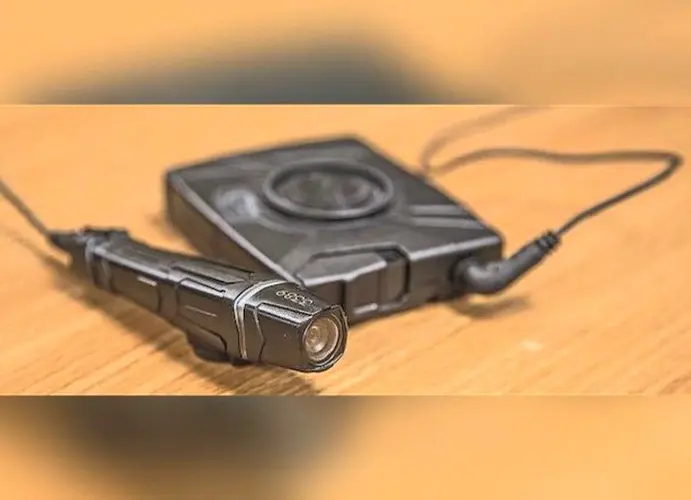
Last public hearing for body worn camera rules this week
Public hearings meant to inform the community about the Guam Police Department’s body-worn camera policies are drawing almost no one — with one more public hearing left. Three public hearings were scheduled to answer critical questions: who ca

Public hearings meant to inform the community about the Guam Police Department’s body-worn camera policies are drawing almost no one — with one more public hearing left.
Three public hearings were scheduled to answer critical questions: who can access body cam footage? How is it used? What safeguards protect the public? But the first two wrapped up in just 15 minutes — with little to no public participation. Senator Chris Barnett, who authored the law creating the program, says more should have been done to inform residents.
"Definitely the Guam Police Department could have done a better job of informing the public about these hearings," commented the lawmaker. Barnett is encouraging residents to attend the final hearing, saying, "The last one is this Thursday at Malesso at 6pm at the Malesso Senior Center. This is a good opportunity to ask the Guam Police Department officers and leadership about these body cam rules and regs — who gets to see the footage, how will footage be used under certain circumstances. These are valid questions that people can ask GPD."
The hearings come as the body-worn camera program — initially hailed as a step forward in accountability and transparency — remains suspended.
The law was signed in December 2023. Cameras rolled out last summer to Patrol, Highway, SWAT, and CID units. Officers were required to activate them during nearly all public interactions and upload footage at the end of each shift. But in a memo dated September 28, 2025, Chief of Police Stephen Ignacio announced a temporary suspension pending a review of administrative procedures.
Despite the pause, GPD leadership says the department stands behind the program. Colonel Joseph Carbullido stated, "The Guam Police Department remains fully supportive of this program and confident in its value to our officers and community."
"We firmly believe this technology enhances professionalism, strengthens accountability, protects our officers from unfounded complaints, and reinforces public confidence in law enforcement."
Program manager Captain Donald Flickinger says officers were trained before deployment, noting, "Every single officer and supervisor in the department went through extensive training on activations — when to use it, when not to use it, and check-out procedures."
Still, Senator Barnett believes the rollout should have been more thorough — saying the cameras hit the streets before all policy concerns were fully addressed. "The GPD leadership definitely should have been more thorough in rolling out the body-worn cameras policy and usage. The body-worn cameras actually hit the streets before they were rolled back both internally with the guam police department and externally where body camera could have absolutely provided more insight into goings-on that are happening."
He adds that in cases involving allegations of abuse of power, body cam footage could be critical in internal investigations. Barnett said, "So whether it’s a higher-ranking officer and hearing all kinds of allegations about abuse of power — that’s where body cam footage would have come in handy with ia investigations."