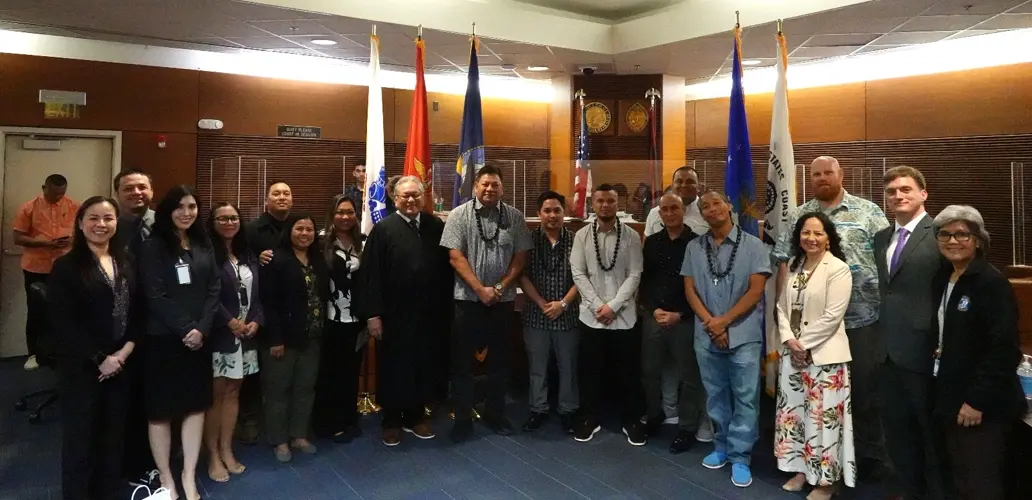
Judiciary celebrates treatment court graduates
The Judiciary celebrated the graduations of three of its treatment court programs last week, recognizing treatment as the most effective tool for addressing substance use disorders. Two participants completed the Driving While Intoxicated Treatment Court,
The Judiciary celebrated the graduations of three of its treatment court programs last week, recognizing treatment as the most effective tool for addressing substance use disorders.
Two participants completed the Driving While Intoxicated Treatment Court, a program providing intensive supervision and therapeutic support for individuals charged with impaired and intoxicated driving offenses.
Judge Vernon P. Perez, who presides over the DWITC, commended the graduates for their perseverance.
“Their hard work in the program is significant,” Perez said. “For years, each of them had to attend treatment groups and meetings online or in person. They’ve had to abstain—a minimum of six months without testing positive,” said Perez.
The following day, Nov. 15, an additional six participants graduated from the Veterans Treatment Court, which offers tailored support for veterans coping with service-related addiction, mental health challenges, and other co-occurring disorders.
Presiding Judge Alberto C. Lamorena III, who oversees the VTC and is a pioneer of the Judiciary’s treatment courts, encouraged the graduates to maintain their progress.
“To succeed, you must maintain your sobriety. It is not just the key to your recovery—it’s the key to your future,” Lamorena said. “If you need support, we will take you in—no questions asked.”
The week’s celebrations concluded with the graduation of one participant from the Guam Family Recovery Program, which marked its seventh anniversary this year.
The GFRP focuses on eliminating parental substance abuse and equipping parents with the skills to create safe, nurturing, and substance-free homes.