University of Guam researcher discovers soft corals genes for climate change resilience

A team of scientists at the University of Guam Marine Laboratory discovered how a unique gene helps soft corals recover from the stress of climate change. Dr. Gaurav G. Shimpi is joined by fellow UOG Marine Laboratory researcher Dr. Bastian Bentlage and s

September 26, 2024Updated: October 10, 2024
Super AdminBy Super Admin

A team of scientists at the University of Guam Marine Laboratory discovered how a unique gene helps soft corals recover from the stress of climate change.

Dr. Gaurav G. Shimpi is joined by fellow UOG Marine Laboratory researcher Dr. Bastian Bentlage and scientists from Ludwig Maximilian University of Munich for a study published in the “Journal of Experimental Marine Biology and Ecology.”

The study found that soft corals exhibit unique genetic responses mediated by mitochondria to climate change-related stressors, such as global warming and ocean acidification.

Stony corals make up the structural foundations of reefs, but soft corals are crucial for ecological balance, contributing to biodiversity, habitat provisioning, nutrient cycling, and reef resilience.

Coral reef ecosystems are threatened more and more by rising sea temperatures, ocean acidification and pollution. 

“These octocorals have very unique ways to deal with environmental change, and there are studies showing that these corals are resilient to climate stress,” Shimpi said. 

Coral bleaching and erosion in soft corals is not as common, or as devastating, as it is with hard corals.

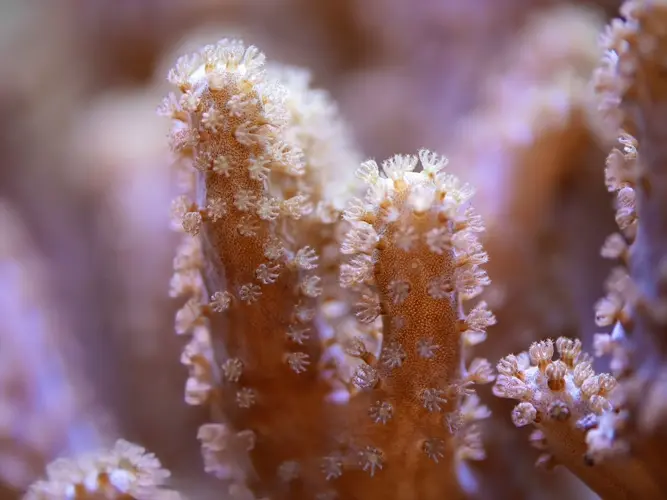
Doing most of their work in Germany, Shimpi and his team studied a soft coral species from the genus Sclerophytum, which is abundant around Guam. 

They exposed the corals to simulated environmental stressors, including higher temperatures, lower pH and oxidation.

To read more on soft corals and its study, follow this link: https://www.sciencedirect.com/science/article/pii/S0022098124000662.