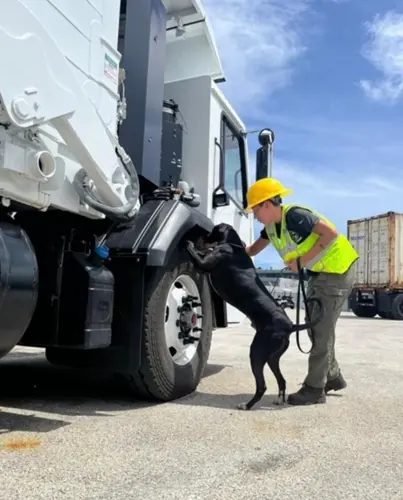
Detector Dog Team prevents coconut rhino beetle spread to Marshall Islands
The coconut rhino beetle was stopped from going to other islands thanks to the Guam Invasive Species Detector Dog Team. The unit stopped a live coconut rhino beetle from hitching a ride on a heavy equipment vehicle at the Port Authority of Guam. The vehic
The coconut rhino beetle was stopped from going to other islands thanks to the Guam Invasive Species Detector Dog Team. The unit stopped a live coconut rhino beetle from hitching a ride on a heavy equipment vehicle at the Port Authority of Guam.
The vehicle was headed to Majuro in republic of the Marshall Islands where beetles are not present.
University of Guam assistant professor and biosecurity program principal investigator Glenn Dulla said, "We've been working on interdiction, meaning trying to catch the beetle or other invasive species at the ports of entry. So we run traps, we do pesticide treatments, biocontrol. And then the Detector Dog Team is a component of the Interdiction Program. And really, the Detector Dog Team is so important because they are the last set of eyes. Or in case of the dog team the last set of noses that sniff out and try to find the coconut rhinoceros beetle on any cargo leaving Guam."
The beetle was immediately secured and handeed over to the Guam Department of Agriculture entomologist. The rhino beetle was first detected in Guam in 2007, and it's presence has grown at other islands including Rota, Palau, Samoa, Fiji, Oahu and Kauai.
Dulla said, "So, although we have not been successful, you know, a lot of the techniques and technology and practices that have been developed on Guam, are being passed on to the other islands that are getting new infestations."
Dulla’s team is not giving up in their efforts to rid of them. He says researchers at UOG as well as Australia, Japan and New Zealand, are working on management strategies, specifically biocontrol.
So far, there are fungal pathogens that can kill the beetle and also different viruses. He adds research is ongoing, and more funding and efforts are being put into biocontrol research.