Island schools adjusting to keep pace with technology
Technology is changing the way our children are learning and communicating, and school systems around the island are evolving to keep up.
by Isa Baza
Guam - Technology is changing the way our children are learning and communicating, and school systems around the island are evolving to keep up.
With advances in technology, a new form of curriculum has taken over the classroom. Emphasis on technology to facilitate learning is something utilized throughout Guam, at public, private, and even Department of Defense schools. DoDEA superintendent Stephen Bloom told KUAM News, ""We're being able to deal with much more complex issues where technology becomes much like the pencil and the book of the future - it's really the launching pad for students to explore the learning around them."
Academy of Our Lady of Guam literature teacher Cristina Mantanona agrees, saying her school's use of Edmodo, an online platform much like Facebook, has allowed her students to interact both in and out of the classroom. Sometimes she even gets notifications from them late at night, adding, "'Hey, Mrs. Mantanona, we were talking about this in class and I saw this video and it reminded me of a lesson', and so they would post it so all their peers could see it and then you would see all the girls chime in and they'll react to it."
She says interactive programs such as Edmodo allow students to get immediate feedback and continue the learning the process at home.
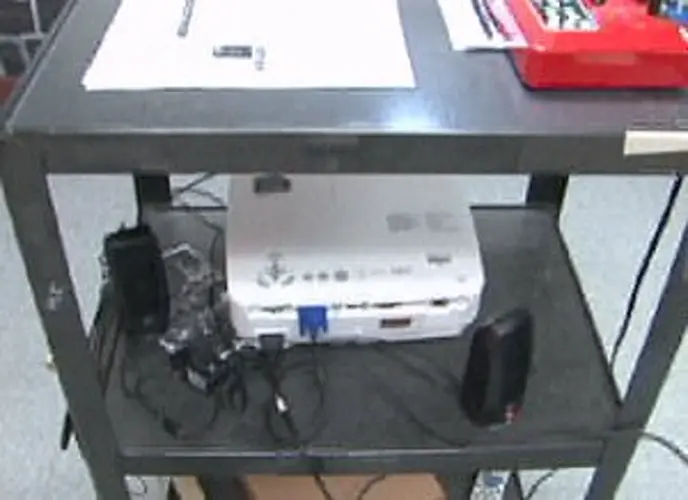
Some new technologies also utilized by schools include increased access to computer labs, tablets, use of online books, Ladybug projectors, and even applications. Many schools now have WiFi throughout campus, and DOE even has a portable computer lab that can be moved from class-to-class. DOE superintendent Rob Malay said, "There are several different things we are doing to incorporate technology in the classroom. We do have interactive white boards that some of our classrooms have, we have them in all of our schools."
These smartboards can be connected to calculators to make learning math more interactive and can also be used to illustrate processes such as dissecting frogs, all without having to actually buy frogs or use sharp tools.
DoDEA also gives students access to online courses they can take with students from bases around the world. "They'll be in with students from Germany and Korea, from Italy as well as Japan," Bloom added, "so that when we gather those resources in our virtual school they're able to take the courses for credit."
This allows students to take courses that would not otherwise be offered at their school, such as advanced video production, music, or language courses.
It is clear that the traditional education most of us grew up with is now transforming into an interactive playing field that allows students to better play to their strengths and pursue their interests. It will be interesting to see how education continues to evolve in years to come.
Guam - Technology is changing the way our children are learning and communicating, and school systems around the island are evolving to keep up.
With advances in technology, a new form of curriculum has taken over the classroom. Emphasis on technology to facilitate learning is something utilized throughout Guam, at public, private, and even Department of Defense schools. DoDEA superintendent Stephen Bloom told KUAM News, ""We're being able to deal with much more complex issues where technology becomes much like the pencil and the book of the future - it's really the launching pad for students to explore the learning around them."
Academy of Our Lady of Guam literature teacher Cristina Mantanona agrees, saying her school's use of Edmodo, an online platform much like Facebook, has allowed her students to interact both in and out of the classroom. Sometimes she even gets notifications from them late at night, adding, "'Hey, Mrs. Mantanona, we were talking about this in class and I saw this video and it reminded me of a lesson', and so they would post it so all their peers could see it and then you would see all the girls chime in and they'll react to it."
She says interactive programs such as Edmodo allow students to get immediate feedback and continue the learning the process at home.
Some new technologies also utilized by schools include increased access to computer labs, tablets, use of online books, Ladybug projectors, and even applications. Many schools now have WiFi throughout campus, and DOE even has a portable computer lab that can be moved from class-to-class. DOE superintendent Rob Malay said, "There are several different things we are doing to incorporate technology in the classroom. We do have interactive white boards that some of our classrooms have, we have them in all of our schools."
These smartboards can be connected to calculators to make learning math more interactive and can also be used to illustrate processes such as dissecting frogs, all without having to actually buy frogs or use sharp tools.
DoDEA also gives students access to online courses they can take with students from bases around the world. "They'll be in with students from Germany and Korea, from Italy as well as Japan," Bloom added, "so that when we gather those resources in our virtual school they're able to take the courses for credit."
This allows students to take courses that would not otherwise be offered at their school, such as advanced video production, music, or language courses.
It is clear that the traditional education most of us grew up with is now transforming into an interactive playing field that allows students to better play to their strengths and pursue their interests. It will be interesting to see how education continues to evolve in years to come.

By KUAM News