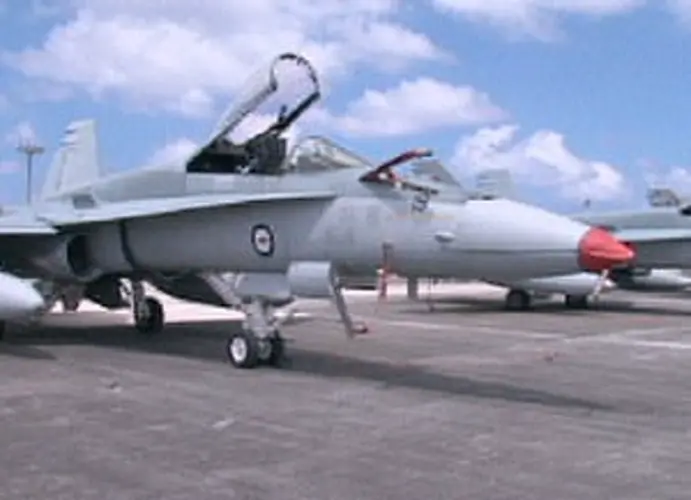
Cope North tests military readiness
It's that time of the year where our nation's Air Force tests their capabilities in the annual Cope North multilateral exercise.
by Jolene Toves
Guam - It's that time of the year where our nation's Air Force tests their capabilities in the annual Cope North multilateral exercise. The Cope North exercise first began in 1978, and in 1999 the first Cope North exercise was held in Guam.
Since then it has evolved in scale and participation. US Air Force Colonel David Mineau told KUAM News, "This year is the largest Cope North to date we have approximately 2,000 airmen from our three services including 94 total aircraft." Cope North 15 will be broken into two parts: the first will focus on air combat tactics and large force employment. Participating are military personnel from the US Air Force, Japanese Air Self Defense Force, Royal Australian Air Force, and the Republic of Korea.
Royal Australian Air Force Captain Phil Gordon said, "So the main focus of the exercise is the trilateral exercise between our three countries which is a large force employment so that's our fighter aircraft our command and control aircraft our aerial re-fuelers all working together in large packages doing defensive cannery, things like that."
The second part of the exercise involves the Republic of Korea, New Zealand, US, Japan and Australian forces. We should add this is the first time the Royal New Zealand Air Force and the Philippine Air Force will take part in Cope North. They will provide personnel to support humanitarian assistance and disaster relief. Gordon added, "The other part of the exercise is again started as a trilateral exercise between our three countries to practice humanitarian assistance and disaster relief and that's where a transport aircraft contingency response squadrons aeronautical evacuation personnel have come together to deal with a simulated problem."
Exercises such as Cope North are integral as they increase the countries ability to work together to address any adversity that may occur in the Pacific Region. Week One of the exercise will consist of humanitarian assistance and disaster relief training and air combat training; during the second part of the exercise the focus will shift to large force employment training, fighter versus fighter air combat tactics training and air to ground strike mission training.
"The kind of complex training that we can get out of that is exactly what we would expect to see if we were called upon to do it for real. There's nothing quite like when you get an opportunity to exercise with other partners and other countries and other aircraft to increase that shared understanding of how we each do the job," said Gordon.
Cope North is already underway and will continue through February 27. During this time residents in Guam, Saipan and Tinian will see an increase in military activity and noise.
Guam - It's that time of the year where our nation's Air Force tests their capabilities in the annual Cope North multilateral exercise. The Cope North exercise first began in 1978, and in 1999 the first Cope North exercise was held in Guam.
Since then it has evolved in scale and participation. US Air Force Colonel David Mineau told KUAM News, "This year is the largest Cope North to date we have approximately 2,000 airmen from our three services including 94 total aircraft." Cope North 15 will be broken into two parts: the first will focus on air combat tactics and large force employment. Participating are military personnel from the US Air Force, Japanese Air Self Defense Force, Royal Australian Air Force, and the Republic of Korea.
Royal Australian Air Force Captain Phil Gordon said, "So the main focus of the exercise is the trilateral exercise between our three countries which is a large force employment so that's our fighter aircraft our command and control aircraft our aerial re-fuelers all working together in large packages doing defensive cannery, things like that."
The second part of the exercise involves the Republic of Korea, New Zealand, US, Japan and Australian forces. We should add this is the first time the Royal New Zealand Air Force and the Philippine Air Force will take part in Cope North. They will provide personnel to support humanitarian assistance and disaster relief. Gordon added, "The other part of the exercise is again started as a trilateral exercise between our three countries to practice humanitarian assistance and disaster relief and that's where a transport aircraft contingency response squadrons aeronautical evacuation personnel have come together to deal with a simulated problem."
Exercises such as Cope North are integral as they increase the countries ability to work together to address any adversity that may occur in the Pacific Region. Week One of the exercise will consist of humanitarian assistance and disaster relief training and air combat training; during the second part of the exercise the focus will shift to large force employment training, fighter versus fighter air combat tactics training and air to ground strike mission training.
"The kind of complex training that we can get out of that is exactly what we would expect to see if we were called upon to do it for real. There's nothing quite like when you get an opportunity to exercise with other partners and other countries and other aircraft to increase that shared understanding of how we each do the job," said Gordon.
Cope North is already underway and will continue through February 27. During this time residents in Guam, Saipan and Tinian will see an increase in military activity and noise.

By KUAM News