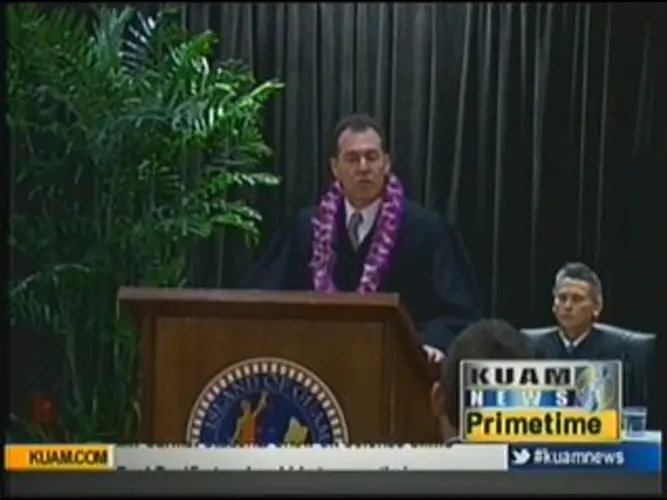
Criminal defense bar questions Judge Canto's impartiality

There are growing concerns that Judge James Canto's personal relationship will impair his ability to be fair and impartial during criminal proceedings.

April 23, 2013Updated: April 23, 2013
KUAM NewsBy KUAM News

by Mindy Aguon

Guam - Two defense attorneys have filed objections to a Superior Court of Guam judge presiding over their client's criminal cases. And there are growing concerns that the judge's personal relationship will impair his ability to be fair and impartial during criminal proceedings.

Objections have been filed in two criminal cases questioning Judge James Canto II's ability to preside over criminal cases currently pending before his court. Attorney Randy Cunliffe has moved to disqualify the judge from presiding over his client, Kyle Evan Blas', criminal case.  According to the objection, Cunliffe believes that Canto failed to disclose facts that require his disqualification. Because of the judge's alleged failure to do so in open court, Cunliffe has objected to Canto's competency to preside over the case. 

At issue is the judge's relationship with a prosecutor from the Office of the Attorney General. According to documents filed in Blas' case, Canto was seen observing the prosecutor's performance in a trial before Judge Vern Perez and also seen attending a session in Presiding Judge Alberto Lamorena's courtroom where she was the prosecutor involved.  Cunliffe argues that he can only assume that Judge Canto was observing the assistant attorney general's performance in order to give her advice on how to be a better prosecutor and lawyer. 

He goes on to state that since she works at the AG's Office, such advice would likely be shared with other attorneys general.  Cunliffe says, "It is not the judge's duty to create better attorneys general and to give them advice as to how to practice law and his behavior creates an appearance of impartiality." A declaration filed by the attorney states that he has been approached by "quite a number of lawyers who practice criminal defense work who have expressed concerns over Judge Canto hearing criminal matters while he is in a relationship with an attorney working in the Prosecution Division of the AG's Office".

In fact, Cunliffe notes that the matter was discussed at length during a recent meeting of the criminal defense bar.

Cunliffe notes that the judge has the right to have relationships, but those must be made known to the parties as a disqualifying fact so that the parties can determine how they wish to proceed.  He adds failure to recognize this duty, based upon the behavior exhibited by the court, creates more than just an appearance of partiality as violations of the American Bar Association's Model Rules of Judicial Conduct are grounds for discipline.

Attorney Curtis Van De Veld meanwhile has filed a similar objection in Norman Camacho James, Jr's case.  During a hearing last week the judge confirmed he was involved in a relationship with a prosecuting attorney, but maintained that the relationship did not rise to the level of a disqualifying relationship as the prosecuting attorney did not appear in the judge's courtroom on the matter before him and was walled off from the cases before him.

But Van De Veld and his client aren't so convinced and believe the judge will make legal rulings favorable to the government whether his girlfriend is representing the prosecution in his court or not. Van De Veld refers to a recent trial where he observed the judge's girlfriend in the courtroom communicating with the prosecutor. He alleges the judge's demeanor and behavior changed dramatically when the woman came into his courtroom. The defense attorney characterized the judge's actions by saying, "Canto became exceedingly cold to the defense from that moment on and seemed warm to the prosecution." The attorney believes the girlfriend's presence may have affected the judge's exercise of decision making during the trial.

Van De Veld doesn't believe that walling off the prosecutor is effective since she still appears in Canto's courtroom while other criminal matters are being addressed by the court, raising concerns about his ability to be impartial. The judge has not yet responded to the objections that were filed so it remains to be seen whether the decisions made in these two cases will have an impact on whether the judge will be able to sit on any criminal cases in the future. 

KUAM News made attempts to contact Judge Canto for comment on this story. Instead court policy, planning and communications director Joshua Tenorio says it would be inappropriate for a judge to comment on any case before him. Tenorio added that the Superior Court has many instances in which parties object to the sitting judge for some reason or another.

Guam law sets a ten-day deadline for a judge to answer to an objection for him or her to sit on a case.

In the meantime, KUAM News attempted to get comment from the Attorney General's Office on the issue of a prosecutor having a relationship with the judge and the office's effort to have that prosecutor walled off from any matters before canto's court. Spokesperson Carlina Charfauros said, "We (are) ethically and legally bound to withhold comment on active and ongoing cases."