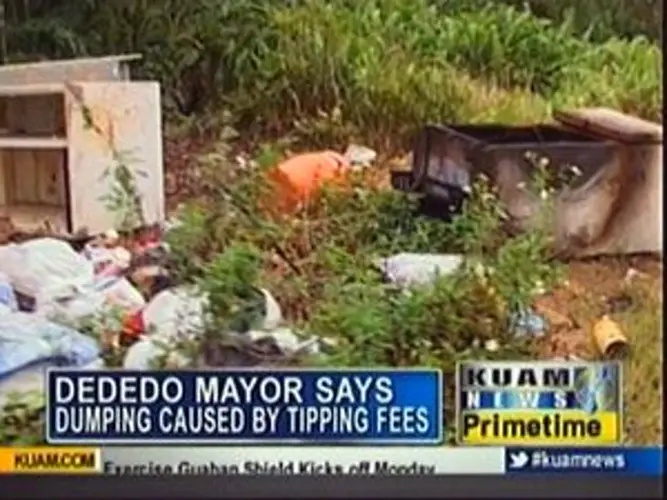
Illegal dumping continues throughout big villages
"This is one of my biggest problems. People are not responsible," said Yigo mayor Rudy Matanane.
by Krystal Paco
Guam - "This is one of my biggest problems. People are not responsible," said Yigo mayor Rudy Matanane. He explained that efforts to clean the northern village often go wasted, adding, "This is part to Gil Machanao and where it leads down to the Zero Down homes, and I guess this is where they throw all their trash."
The dirt road has served as an illegal dumpsite for years. And this morning, Mayor Matanane discovered smoke from a smoldering fire, she said, "What I am trying to do now is get dumpsters situated at places like this but one thing about doing that it has to be controlled because if it's not controlled it's going to be the same thing, but this is a concern that EPA and Public Health should get together with the mayor's office and find a solution for this." Astumbo GFD had to extinguish a fire...they say had it been dry season, this trash fire could've escalated into a grass fire affecting the 200 nearby homes.
"As much as possible when we have volunteers or extra manpower we try to go and clean up what we can in there," she added.
Dededo mayor Melissa Savares says illegal dumping results from residents who can't afford to pay the $30 monthly tipping fees, telling KUAM News, "As long as we have the tipping fee and residents who are going to have to pay and then some residents are not really sure about sorting their waste. We're going to have illegal dumping in isolated areas."
Guam Environmental Protection Agency spokesperson Tammy Jo Anderson Taft encourages residents to help by taking pictures, keeping a log of dates and times, and noting license plates numbers when they suspect illegal dumping in their village. "And the more eyes and ears we have out there of people looking for information related to whoever might be dumping things illegal, the better chance we have at improving the enforcement we have in this area," she explained.
Mayor Savares suggested residents take action if they see somthing fishy, saying, "Get a license plate number, call the mayors let us know one of the things is that I always tell residents if you get caught, it's a $1,000 fine. Anything up to $1,000 - it's better to pay the $15 or $30 than to pay $1,000."

By KUAM News