Insurance companies review impact to healthcare

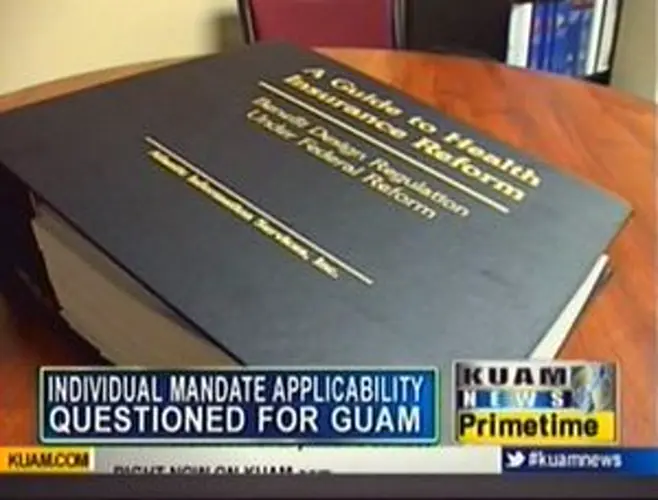
Local health insurance companies are trying to get a handle on the 192-page United States Supreme Court decision and what it means for the healthcare industry on Guam.

June 29, 2012Updated: June 29, 2012
KUAM NewsBy KUAM News

by Mindy Aguon

Guam - Local health insurance companies are trying to get a handle on the 192-page United States Supreme Court decision and what it means for the healthcare industry on Guam. The highest court in the land today deemed the Affordable Care Act constitutional based on the Internal Revenue Code, which Guam mirrors.

Netcare Health Plan administrator Jerry Crisostomo says they believe that based on the tax code, the mandate requiring employers and individuals to get health insurance beginning in 2014 applies to Guam. The problem is that thousands of island residents currently choose not to have health insurance because they can't afford it.

So if the government, through the Affordable Care Act, mandates it, the question is who will subsidize the premiums for those who can't bear the cost. Crisostomo said, "Is it going to come from the Government of Guam? Is it going to come from the U.S. Treasury? It's still unclear and I think it's incumbent upon the tax commissioner or the insurance commissioner on Guam and the Attorney General to look at the law carefully and to see if it does indeed apply to the territory because if it does it's going to have cost implications to everybody."

Previous interpretations of the law found that the individual mandate did not apply to Guam, and Crisostomo points out that the majority of employers locally already provide health insurance to their employees.  

Calvo's SelectCare health plan administrator Frank Campillo says the ruling presents a number of challenges to Guam, many of which the local government can't afford. "The subsidies will cover people under 133% of the poverty line for singles and 400% for families, yes, I will say a significant number of the population will qualify for those subsidies and it will be very detrimental to the island. It will be similar to what happened with the earned income tax credit," he said.

Campillo says it would be another unfunded mandate from Congress. Another area of concern is proposed changes to Medicaid. "In particular, Guam is going to be affected significantly because the Treasury of Guam in our opinion will not have the financial resources to provide the necessary financial payments that will be required of this Medicaid mandate," he explained.

Meanwhile, both companies support other reform provisions including one that extends coverage of health insurance benefits up to 26 years old, preventative maintenance care, and the removal of annual limits and pre-existing conditions.  But because the law lacks mechanisms to control costs, the insurance companies warn that costs are going to go up.

Crisostomo said, "How much remains to be seen but it will definitely cost more for consumers unfortunately."