Senators weigh free speech concerns as bill targets "deceptive" AI use
Today, the truth has never been more difficult to decipher, with artificial intelligence tools making it easier than ever to manipulate images, audio, and video. And with concerns over its impacts on democratic elections mounting, lawmakers are weighing l

Today, the truth has never been more difficult to decipher, with artificial intelligence tools making it easier than ever to manipulate images, audio, and video. And with concerns over its impacts on democratic elections mounting, lawmakers are weighing legislation to crack down on deceptive AI-generated political content to protect voters this election season.
As the innovation of generative AI evolves and becomes more accessible, it’s become increasingly easy for the public to fall victim to false and misinformation. And with election season ramping up on the island, ensuring the public’s trust is not eroded is critical for one senator.
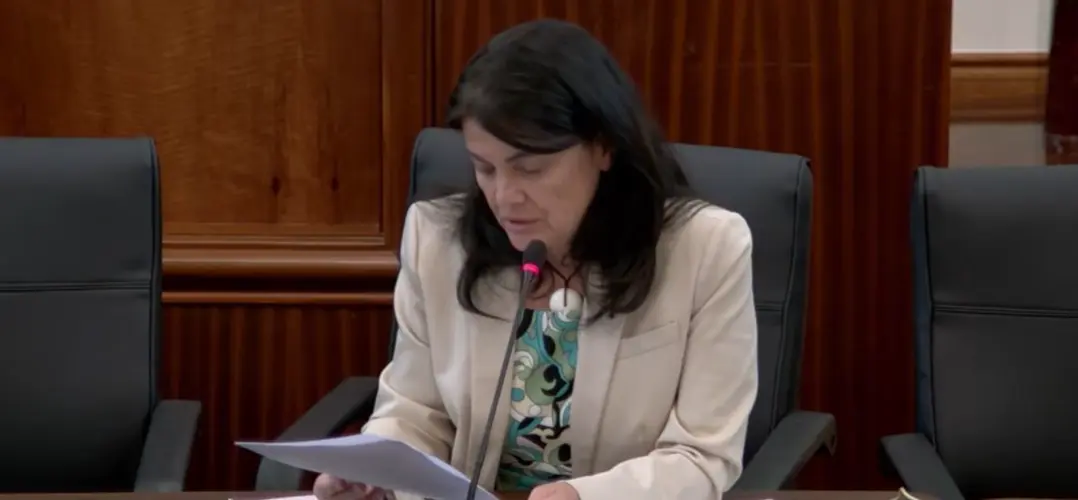
Bill 209 by Senator Tina Muña Barnes would prohibit the creation and distribution of “materially deceptive media produced by generative AI in connection with elections”, and requires clear disclaimers for AI-generated media.
Barnes says AI poses a direct threat to democratic elections, and while Guam has not yet experienced this problem, Barnes believes proactive action must be taken now. She said, “Importantly, this bill does not ban political speech or artificial intelligence. It is narrowly tailored to address only the intentional distribution of materially deceptive AI-generated media."
The bill specifies that penalties -- to be enforced by the Attorney General's Office -- will be applied to individuals who knowingly create and distribute AI materials to falsely represent a candidate, harm their electoral prospects, or alter voting patterns.
Senator Therese Terlaje took issue with the measures exemptions section as it states AI-generated material in this context shall not be in violation “if the distributor does not have actual knowledge that the material is prohibited…does not intend to injure or harm the reputation or prospects of the depicted individual, influence an election...or deter any individual from voting in an election."
Sentor Terlaje said, “That seems very subjective to me that someone did not intend to harm a candidate’s reputation. They might say that was just a joke, right? That’s where I think the lines are going to be very, very hard even for a court with all its knowledge to distinguish.”
“That sounds to me like ignorance of the law is allowed here for some, but not for others.”
Terlaje also shared written testimony from Guam Homeland Security and the Office of Civil Defense, who opposed the bill as it criminalizes and creates civil liability for speech based solely on its content and the technology used to create it without requiring proof of actual malice or intent to deceive voters about core election communication.
“It lacks clear guidance on who makes the initial determination that content is ‘materially deceptive’ versus satirical, educational, or legitimately synthetic," she stated.
Senator Terlaje also pointing out though not AI-generated, political cartoons from past Guam elections have also allowed the public to maintain their freedom of speech while being critical of candidates.
As Bill 209 awaits further review, officials remind voters to stay informed and critically evaluate the content that reaches your screens.