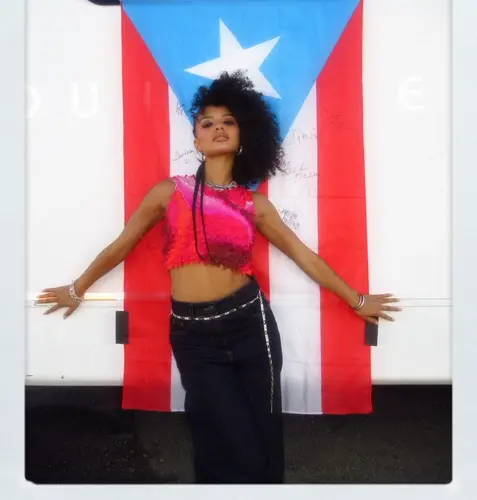
Dancer with Guam roots was part of Bad Bunny's Super Bowl halftime show
For Sierra Herrera, the Super Bowl stage became a platform for something bigger than performance. As one of the few if not only Chamoru in Bad Bunny’s halftime show, she says it was deeply meaningful to represent her island roots — especially

For Sierra Herrera, the Super Bowl stage became a platform for something bigger than performance. As one of the few if not only Chamoru in Bad Bunny’s halftime show, she says it was deeply meaningful to represent her island roots — especially after visiting Guam for the first time just last summer and reconnecting.
Herrera is used to big stages — but the Super Bowl halftime show with the Grammy Award winner was different. "It was the knowledge I had seen the show be built over the last couple weeks and I knew the impact it was going to have. It was going to be huge and really important," she shared.
She says it wasn’t the crowd that made her nervous — it was knowing how much the performance would mean. And for Herrera, that meaning is rooted in Guam. Her grandmother was born on Guam and raised in Malesso — connections she deeply embraced during a special trip last summer.
It was her first time visiting the island — a family journey that included bringing her grandmother back home and reconnecting with relatives. "It was the most beautiful trip with my family I've ever had. And getting to bring my grandmother back and learning in depth Chamoru culture," she added.
Just months later — she would step onto one of the world’s biggest stages — carrying that newfound connection with her. And when the moment finally arrived — the emotions took over.
She recalled, "I was crying, you see me sitting and crying trying to dry my eyes. I lean over to the girl who was braiding my hair and I'm like crying, I need to get it together before we're on camera. And it comes to me and I'm just sobbing."
While Herrera is a trained professional dancer — this time, she was cast in one of the show’s vignettes. She says the production — built on culture, legacy and community — felt deeply personal, as she said, "You feel an attachment to that. You feel nostalgic when you see them. You don't just see a white chair, you see your grandparents and your family barbecues especially the Chamoru barbecues - they are everything."
For herrera, the halftime show was about more than entertainment — it was about unity. "I think it was a nice medicine and a nice message, that if one person can bring all these people together to build this show and showcase so much culture, and pride, history, and legacy, if one person can do that we should be able to do that for each other," she said.
And she believes the performance resonated because people saw themselves in it, adding, "Anyone who felt emotional it's because you saw yourself somewhere in that performance. Which is exactly what he wanted, and what we all need especially now during this crazy time period."
A seasoned dancer with training in jazz, ballet and contemporary — who has even worked as a backup dancer for Madonna — Herrera says this moment stands apart. And for those watching back home in Guam and around the world, she has a message.
"To the people who are watching, I want them to know that there is a space for you and to keep dreaming big, don't shrink yourself in rooms and make yourself feel smaller. When everyone has so much worth"! she encouraged.