
New digital twin marine tech arrives after University of Guam and South Korea collaboration
The UOG Center for Island Sustainability & Sea Grant program has forged a groundbreaking partnership with the Gyeongin Sea Grant program from South Korea, marking a significant step in international marine science collaboration. This trailblazing partners
 By Super Admin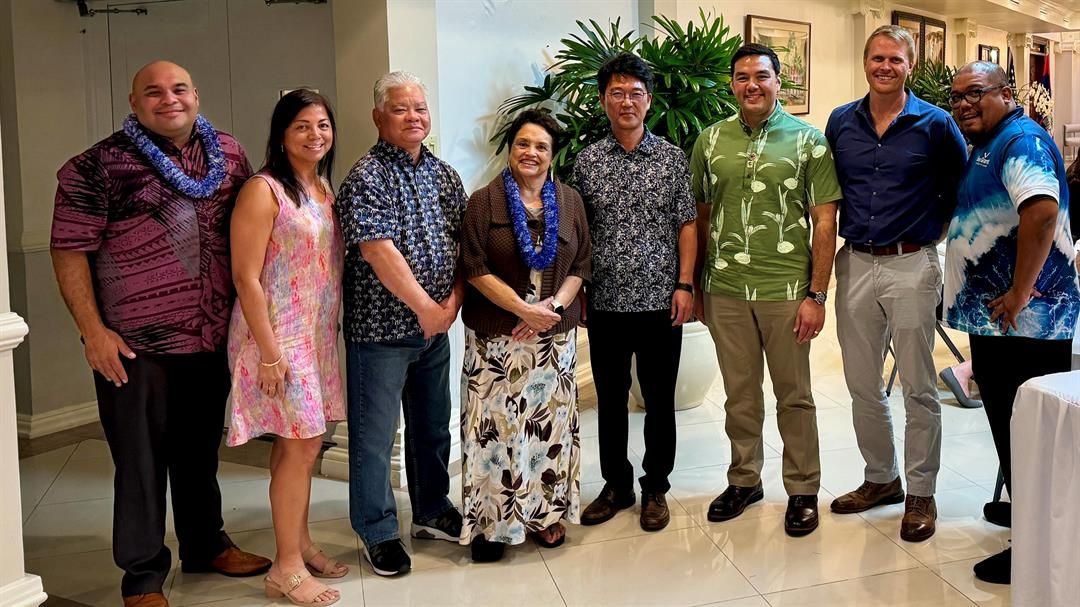
The UOG Center for Island Sustainability & Sea Grant program has forged a groundbreaking partnership with the Gyeongin Sea Grant program from South Korea, marking a significant step in international marine science collaboration.
This trailblazing partnership introduced South Korea’s advanced modeling digital twin technology to the United States through UOG’s assistance.
During a recent visit, representatives from the two institutions agreed to combine South Korea’s sophisticated digital twin modeling with the University of Guam’s extensive marine and fisheries data.
This will improve marine science research, enhance data sharing, and foster stronger ties between the United States and South Korea.
GSG Director Seung-Buhm Woo said the partnership between the two programs will have a major impact on the study of marine ecology in the region.
“The integration of South Korea’s numerical modeling capabilities with Guam’s marine data is expected to lead to significant advancements in understanding marine environments and promoting the sustainability of marine resources,” said Woo.
“This partnership underscores the global nature of marine science research and the importance of international cooperation in addressing the complex challenges facing our oceans,” he added.
UOG CIS/SG’s Brett Taylor, Ph.D., has been working with the South Korea Sea Grant team in preparation for this partnership and is excited for the opportunities this will provide to Guam.
“This is going to give us an opportunity at expanding the understanding of near-shore environments, it opens possibilities for infrastructure with the theoretical modeling, but can be used to build and test hypotheses,” said Taylor. “If we wanted coastal development at the boat basin, you could potentially stick the data into the model and see how it would influence sediment.”