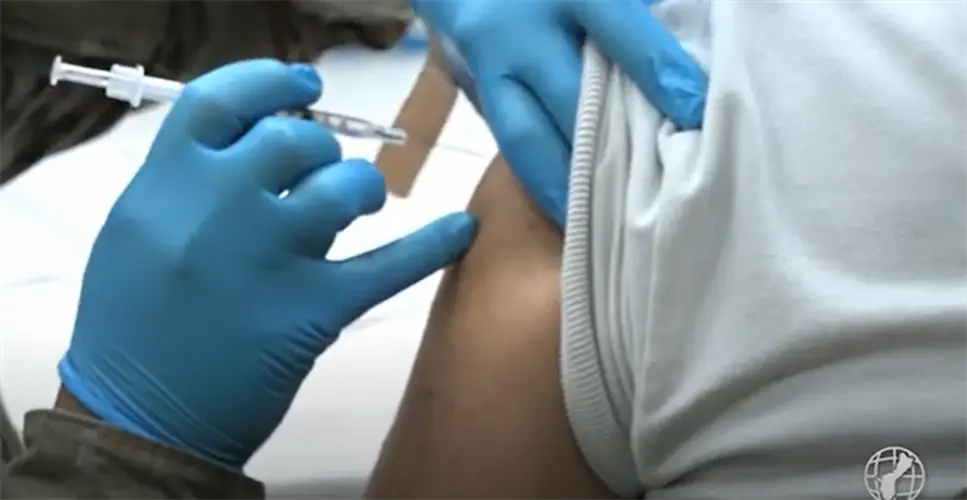
The Department of Public Health and Social Services is advising travelers to remain up to date with their vaccinations following confirmation of pertussis (whooping cough) and measles in Hawaii and the Philippines.

As of April, 2024, the Hawaii Department of Health have confirmed 11 cases of pertussis.

Meanwhile, the United Nations Children’s Fund reported that the Philippines is experiencing an outbreak of over 500 measles cases and some deaths in the Bangsamoro region, and cases of pertussis in parts of Luzon and Visayas.

As of May 2024, there have been no recently confirmed cases of measles or pertussis on Guam.

Measles is a highly contagious viral disease that is primarily spread through person to person contact via large respiratory droplets.  Symptoms are characterized by a generalized rash lasting three days or longer, with fever (101° F or higher) and cough, or coryza (runny nose), or conjunctivitis (red eyes).

Pertussis is a highly contagious respiratory infection caused by bacteria. It can cause severe coughing fits (up to 10 weeks or more), followed by a high-pitched “whoop” sound when breathing in.

Vomiting and exhaustion may also follow. Pertussis can lead to serious complications, especially in infants, such as pneumonia, dehydration, seizures, and brain damage. Some infants may not cough at all. Instead, they may have apnea (life-threatening pauses in breathing) or struggle to breathe.

To find out if the area you are traveling to has an outbreak of either measles or pertussis, or other communicable diseases, please check the Centers for Disease Control and Prevention (CDC’s) travel notice portal at https://wwwnc.cdc.gov/travel/notices.

For travelers, DPHSS Chief Medical Officer Dr. Robert Leon Guerrero encourages you to keep up to date with your shot record for measles and pertussis. 

“While traveling to any destination or areas where either measles or pertussis is spreading, please make sure your shot record is up to date with the MMR vaccine for measles and the DTaP or Tdap vaccine for pertussis,” said Dr. Leon Guerrero.

If a traveler needs a vaccine, DPHSS recommends getting vaccinated at least 2 weeks before your trip. If your trip is less than 2 weeks away DPHSS still recommends getting at least one vaccine dose.

More on vaccine needs for each country can be found here. Your primary physician may also be contacted.

While on travel, the DPHSS also encourages you to protect yourself and family members by minimizing exposure (close contact) to persons who have cold symptoms or cough illness.

The DPHSS also recommends practicing the following steps to help prevent the spread of disease: cover your mouth when coughing or sneezing, and wash your hands often.

Recommendations from the U.S. Centers for Disease Control and Prevention (CDC) for Measles and Pertussis