Unearthing history at Guam's first church

If you do not know your history, then you do not know yourself.
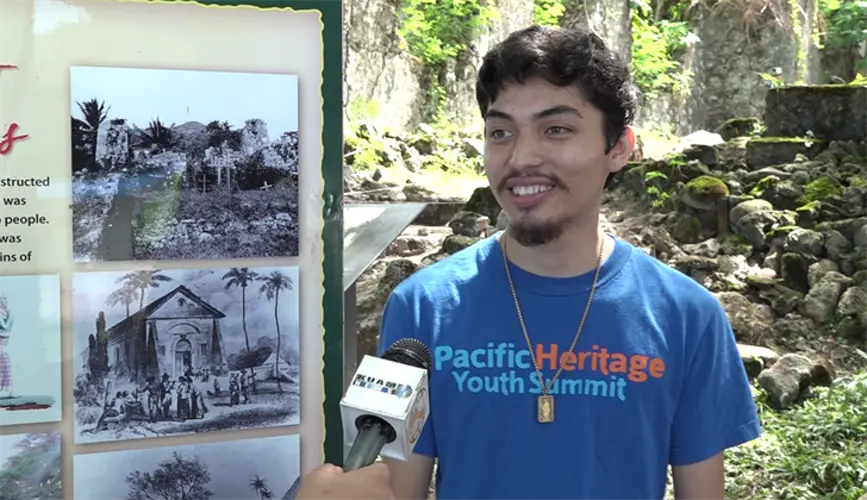
Those are words from Tyler Aguon, a young adult who's lived his entire life in the southern village of Umatac.
History is what he and several people are unearthing just off the tiny strip of road through his village. The site of Guam's first Spanish church from 1681 is being excavated, uncovering colonial period remains. And while this isn't a new effort, there's still plenty to learn.
Aguon is with the Humatak Community Foundation, part of a larger project by the Guam Preservation Trust, Humatak Mayor's Office, and several international universities. Beneath a canopy of trees, they're digging through Guam's first Spanish church, the San Dionisio Church, built in 1681.
"When we first began and I chose this church ruins I actually learned way more than it was just an old church," Aguon said.

He joins a team of local residents and archeologists not far from the site of Magellan's landing, chronicling the island's past.
Just three years after the church was completed in construction in 1681, CHamorus in the opposition tore it down.
Guam Preservation Trust Chief Program Officer Joe Quinata said it is a living classroom that has experienced vast man-made and natural changes through the centuries.
"We collaborate with the community to look at oral histories that are connected to this site and we have a well-rounded history of our lives," he said.
The team of archeologists and architects conduct direct archeology throughout the day and bring their findings back to the lab down the street to record and label every artifact. It's an intricate system that leaves no stone unturned.

Sandra Monton-Subias from the University of Pompeu Fabra in Barcelona and her team are here for their third year. The impact of their research has global and local implications, she said.
"This is part of Spanish colonialism in the 17th century, " she said. "It is part of modern colonialism which is a process that has changed the face of the world."
They've also uncovered remains from a 17th-century colonial burial ground, found the original tiles and paint of the building, and even the church's altar.
What was once torn down by the CHamoru people in opposition is now being pieced back together for understanding.