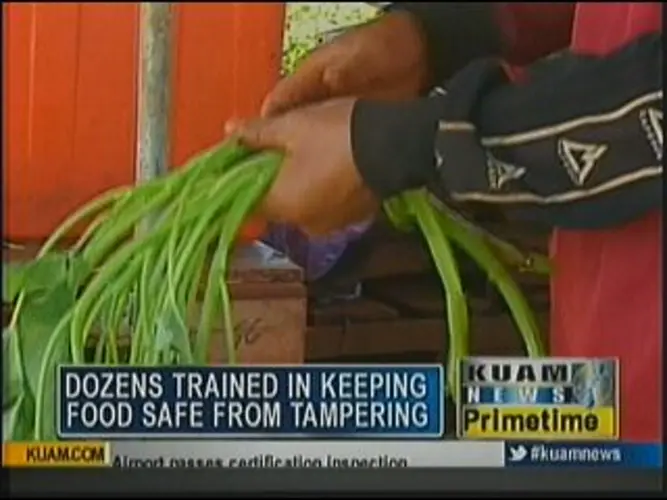
Dozens trained in keeping food safe from tampering

by Krystal Paco
Guam - Before you take a bite, have you ever stopped to think about where your food came from? Food for thought - your produce was handled by dozens of others before you made the purchase at the grocery store.
As Center for Agriculture and Food Security Preparedness associate director Ray Burden reports, all food is at risk. "Vast majority of our foods are traveling many distances whether you're on the mainland or the islands and what we have to understand is that because of this everytime food transfers and stops for rest we like to say food at rest is food at risk," he said. "We're working to try and increase our surveillance and understanding of that."
At a training hosted today by the Guam Homeland Security/Office of Civil Defense and the Texas Engineering Extension Service, dozens of Public Health and Department of Agriculture officials as well as customs officers learned ways to prevent individuals or groups from tampering with our food supply. "At the end of the day we all want to eat safely and that's what we're all about," he said.
For K9 Customs officer Michael Camacho, today's training involved participating in exercises identifying local assets - who brings food in, who grows locally, and who sells locally as these are all potential targets.
"There's people out there there's countries out there that don't like us and that's not the only terrorism that we can receive, we can receive domestic terrorism and as a customs officer its important because now we're learning how to mitigate the risks and how to prepare an emergency response plan," he said.
Before you take a bite, Camacho advises you consider where your food came from. "To the public watch what you eat watch where you're at and be safe because its an issue not too many people think about so when you're sitting there having your dinner try and think about where it came from and is it safe," he said.
The agriculture and food vulnerability assessment training rounds out tomorrow here at the Office of Homeland Security to focus on how food is transported from one place to another.