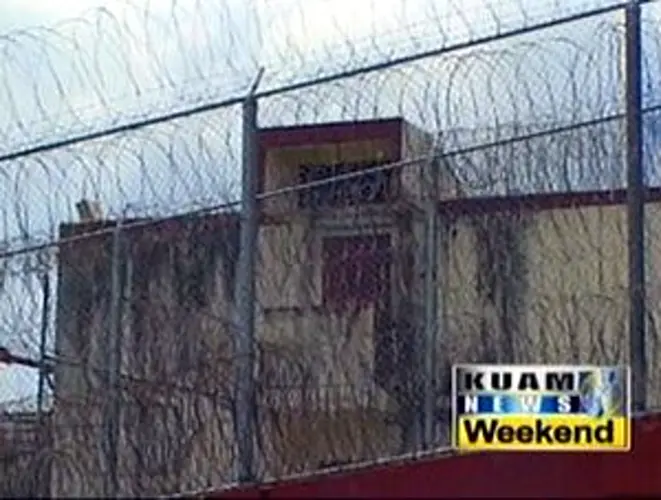
Prison literally running out of room

by Mindy Aguon
Guam - Crime is on the rise around the island and the Department of Corrections is literally running out of room to house the growing number of detainees that are waiting to go to trial. And an alarming number of those being held in the agency's custody are repeat offenders.
About half of the people who have come through the doors of DepCor in the last year have returned at least one other time. Spokesperson Lieutenant Antone Aguon says they had 3,225 booking last years; of those, 3,198 were released while about 30 stayed. "Out of those coming back and forth, 50% were repeat offenders," he explained. "62% of them were basically for probation violations, court drug testing, part of the drug court thing like that 6% were for violent crimes, burglaries 8%, 7.3% were for family violence cases things like that. These are the ones that keep coming back."
While the Department of Corrections by its very name is intended to be a correctional facility to prevent offenders from coming back, the current population fluctuates around the 600 mark - 230 of them are inmates while the remainder are detainees. It's the latter where the department is seeing the most recidivism and there are no programs offered to them because they are presumed innocent.
Aguon said, "So most of the time we're just warehousing them. We do have 200 some inmates Dr. [Andrea] Leitheiser does do a program here and there, but other than that we don't have any other major programs. We used to have drug and alcohol and some other programs but over the last several years due to budget cuts and stuff like that we've had to scale back on our programs, so really we're not doing much."
And while he admits that they should be rehabilitating the inmates they keep in their custody, Aguon says there needs to be treatment to treat the underlying problems of why the individuals are incarcerated in the first place. 67% of the entire population is in jail for committing a drug-related crime. "Recidivism there's a lot of factors that play into that. It's the job market outside so even if we give them a program, give them a drug program, give them and learn to cope with that when they go out is there a job available for them. Are they going to be able to work are there any programs to follow through? Because most of our programs are short-term," he explained.
Aguon says there are stigmas associated with being incarcerated that often make it difficult for convicts to get a job, find transportation, get a driver's license and insurance making it a challenge to survive. Others don't have family support or job skills and get right back into the life of crime. "We've seen people come in here six, seven, eight times in a year that's what some of these numbers are. Sometimes it's the same person over and over," he said.
Aguon says until the department gets more funding to hire more case workers and others who can establish rehabilitative programs for the inmates, DepCor officials are just trying to hold down the line and do their best in hopes offenders won't keep coming through the doors.