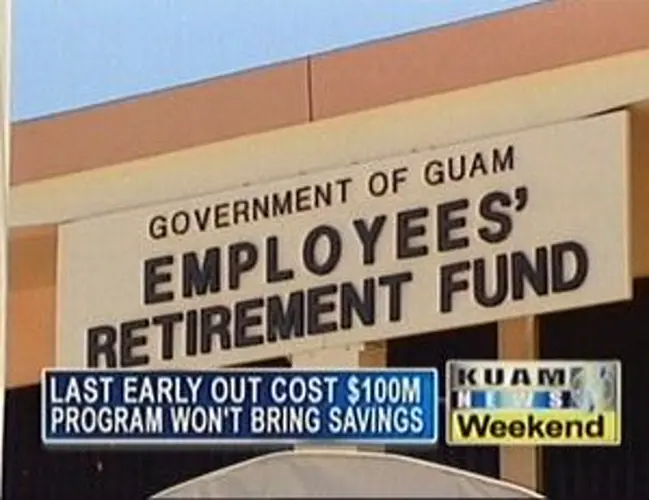
Guam - As the Calvo Administration works to reduce the government's deficit and cut spending specifically by ordering the immediate reduction of some $43 million by June 1, one of the ideas that the governor mentioned is a possible early retirement program.

But the Government of Guam Retirement Fund isn't keen on the idea due to the impacts of the last early-out incentive.

Allowing some public sector staffers to retire early isn't a new idea. In 2000, the government saw some 900+ employees take advantage of the early-out incentive program. But Retirement Fund director Paula Blas says the impacts of that program cost the government a pretty penny, explaining, "The government actually allowed for individuals to receive this benefit prior to making the payment in full along with the government contributions and this cost the government more than $100 million in additional annuities that weren't paid in full just yet."

Blas says the Fund has yet to be made whole and that won't happen for another three years. So the idea of creating a new early out incentive program when the first one hasn't even been paid in full, isn't sitting well with the fund or its board.

"A second early-out is something that the fund will not support because all this does is increase the government's obligation not just with the fact that there's going to be less contributions to the Fund, but it can also increase healthcare costs because you're now shifting these people from active to retiree status," Blas added.

She says individuals who take advantage of an early-out option tend to retire at an earlier age, which means they'll be collecting for more years, resulting in higher pension costs.

While the idea is still being tossed around and there's been no concrete plans to implement early-out once again, Blas says she doesn't believe the board will support the idea since there's just too much at stake.

"Given the current market volatility and just everything nationally, I think there are probably other ways to try to find savings because if you really ask yourself does this program provide or create attrition for the government? Most of the positions that are going to be eligible to retire are in education in DOE, your uniformed personnel and your healthcare people. So can you afford to really have a mass exodus of people at one time," she said.

The Retirement Fund notes that while almost 900 workers left the government 12 years ago, payroll costs for the government have only increased. Blas stresses that any early out plan must ensure that there will actually be a real savings to the government.